
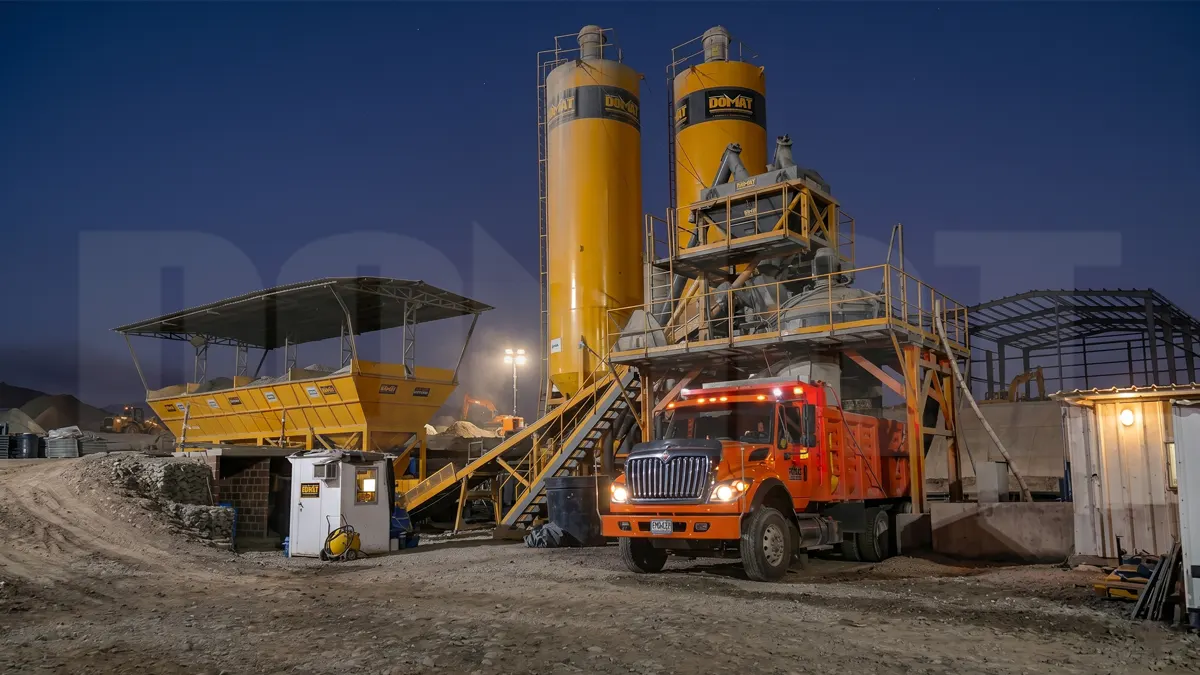
The U.S. construction industry is no longer driven only by capacity or equipment specifications.
In today’s infrastructure environment, profitability is increasingly influenced by how quickly production can be deployed, adapted and aligned with project demand. The ability to generate revenue sooner often creates a greater impact on ROI than equipment specifications alone:
Return on Investment (ROI).
Yet, when it comes to concrete production, many companies still underestimate how much their production model directly impacts profitability.
Why ROI Is the Real Decision Factor in Concrete Production
Most companies evaluate a batching plant based on:
- Initial cost
- Production capacity
- Technical specifications
But in reality, these variables do not define profitability.
What truly matters is how fast the investment generates revenue.
This is particularly true in infrastructure and construction projects where project schedules, site conditions and production requirements can change rapidly. In these environments, profitability is increasingly influenced not only by production capacity, but also by the ability to adapt operations without disrupting productivity.
In the U.S. market, where margins are tight and project timelines are critical, ROI depends on:
- How quickly production starts
- How consistently the plant operates
- How much dependency on third-party suppliers is reduced
- How effectively production capacity can be utilized across multiple projects
- How rapidly operations can respond to changing project requirements
Key insight:
A lower-cost plant with low utilization can become significantly more expensive over time than a higher-value system capable of maintaining consistent production, adapting to project demand and supporting multiple revenue-generating opportunities throughout the year.
Ultimately, ROI is not determined by equipment ownership alone. It is determined by how effectively production assets contribute to project execution, revenue generation and operational efficiency over their entire lifecycle.
The Hidden Costs That Reduce Your ROI
Many ROI calculations fail because they ignore operational inefficiencies.
While acquisition costs are easy to calculate, many of the factors that have the greatest impact on profitability occur after the equipment arrives on site. Delays, underutilization and operational interruptions can silently reduce returns long before they appear on financial reports.
A traditional concrete production model often includes:
- Delays in plant installation (typically several days)
- Dependence on external ready-mix suppliers
- Transportation costs to job sites
- Idle equipment between project phases
- Extended mobilization and demobilization activities
- Site preparation requirements before production can begin
Individually, these factors may appear manageable. However, when combined across multiple projects throughout the year, they can significantly reduce asset utilization, increase operational costs and delay revenue generation.
What does this mean in practice?
Every day without production is not just downtime.
It is lost revenue.
It represents unrealized revenue, delayed project progress and underutilized assets. In competitive construction environments, the ability to reduce non-productive time can have a greater impact on profitability than marginal improvements in production capacity.
This is why high-performing contractors increasingly evaluate concrete production systems not only by output, but also by how quickly they can begin generating value once a project opportunity emerges.
What Actually Improves ROI in a Concrete Plant Investment
Improving ROI is not about reducing cost.
Sustainable profitability is achieved by maximizing the amount of productive work an asset can perform throughout its lifecycle.
The most successful contractors understand that return on investment is influenced by multiple operational factors, including production readiness, equipment utilization, operational flexibility and the ability to respond efficiently to changing project demands.
1. Faster Production Start
Traditional setups can take days—or even weeks—before production begins.
Mobile and optimized systems can reduce this to:
- 24–72 hours (depending on configuration and site conditions)
Impact:
Earlier production start = earlier revenue generation.
In many construction projects, the period between mobilization and production startup directly influences cash flow, schedule performance and overall project profitability. Reducing this interval allows contractors to begin generating value sooner while minimizing non-productive project time.
2. Higher Equipment Utilization
One of the most overlooked ROI drivers is utilization rate.
In many U.S. infrastructure projects:
- Equipment can remain idle for days or weeks between phases
Studies in construction equipment management consistently show that utilization rates below 50–60% significantly reduce asset profitability.
With a flexible production model:
- Plants can be redeployed quickly
- Production continues across multiple projects
The ability to support multiple projects throughout the year can dramatically improve asset utilization rates. Rather than remaining inactive between project phases, production assets can continue generating value across different locations and operational demands.
Estimated impact:
Improving utilization by even 20–40% can significantly increase annual return.
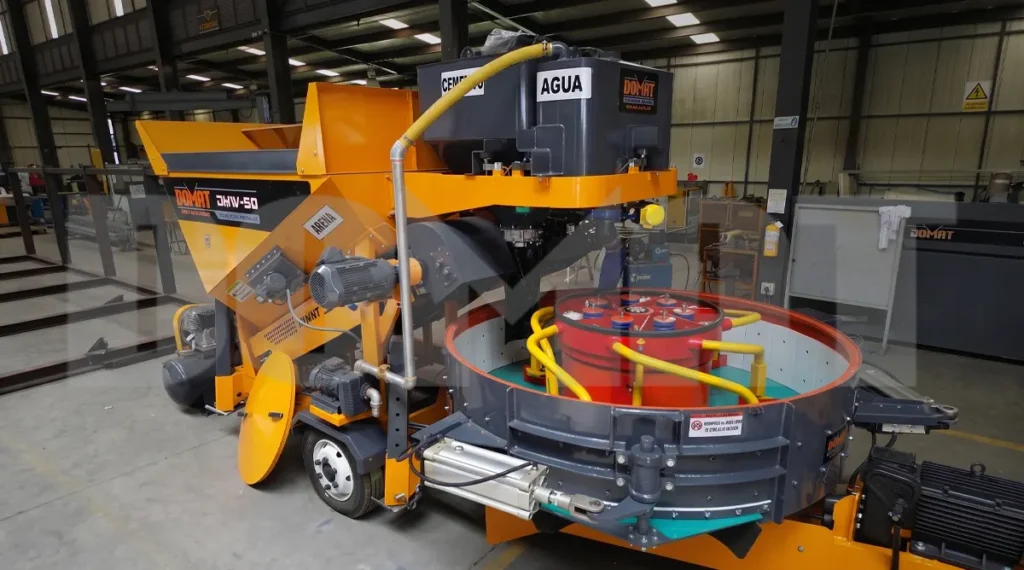
In many cases, utilization has a greater influence on profitability than production capacity itself. A moderately sized asset operating consistently often generates stronger financial performance than a larger system that spends significant periods idle.
Mobility Is the Missing ROI Multiplier
Many ROI evaluations focus on production output while overlooking one of the most influential factors in long-term profitability: mobility. The ability to relocate production capacity, support multiple job sites and adapt to changing project requirements can significantly improve asset utilization while reducing non-productive periods.
In traditional production models, equipment often remains tied to a single location, limiting its ability to generate value once project requirements change. A more flexible approach allows production assets to follow opportunity rather than waiting for opportunity to return.
This operational agility can improve equipment utilization, accelerate project execution and create additional revenue-generating opportunities throughout the year. High ROI is not only about production efficiency. It is also about the ability to deploy production where and when it is needed
3. Reduction in Logistics and Supply Costs
Relying on third-party concrete supply introduces:
- Transportation costs
- Scheduling delays
- Limited control over production timing
On-site production eliminates or reduces these variables.
Result:
- Lower cost per cubic yard
- Greater control over project execution
- Reduced risk of delays
Bringing production closer to the point of use can also reduce transportation dependency, improve scheduling control and provide greater visibility over project execution. Beyond direct cost savings, this level of control often translates into more predictable operations and improved project outcomes.
ROI Scenario: Traditional Supply vs. On-Site Production
Let’s break it down conceptually:
Traditional Model:
- Concrete sourced externally
- Delivery delays affect project timeline
- Limited flexibility
- Ongoing logistics costs
On-Site Production Model:
- Immediate availability of concrete
- Production aligned with project schedule
- Reduced transportation dependency
- Greater operational control
Key difference:
The traditional model focuses on cost per load.
The on-site model focuses on total project profitability.
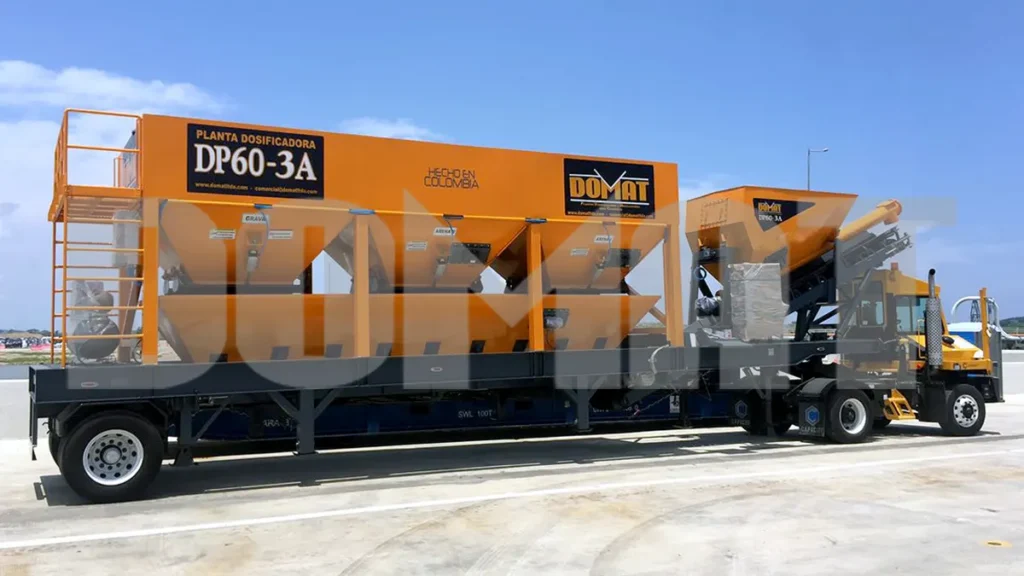
Beyond Cost: ROI as a Revenue Strategy
This is where most companies get it wrong.
They treat a batching plant as a cost.
But in reality, it is a revenue-generating asset.
A well-utilized plant enables:
- Participation in more projects simultaneously
- Faster project execution
- Greater independence from suppliers
- Increased bidding competitiveness
This shifts the conversation from:
“How much does the plant cost?”
to:
“How much revenue can this plant generate?”
Key Metrics to Evaluate Concrete Plant ROI
If you want to make a real investment decision, focus on:
- Time to start production
- Annual utilization rate
- Cost per cubic yard (produced vs purchased)
- Project delays linked to supply
- Number of projects supported per year
Without these metrics, ROI is just an assumption.
Conclusion: ROI Is Not About Equipment—It’s About Performance
Concrete production is no longer a static operation.
In the U.S. market, profitability depends on:
- Speed
- Utilization
- Operational control
Companies that understand this don’t just invest in equipment.
They invest in production strategy.
Want to Calculate the ROI of Your Concrete Operation?
At Domat USA, we help contractors and concrete producers evaluate the real financial impact of their production model.
Our solutions are designed to:
✅ Reduce production delays
✅ Increase equipment utilization
✅ Improve cost efficiency
✅ Maximize return on investment
📊 Request a customized operational ROI assessment
📩 Discover how operational flexibility can improve your project profitability
🔎 Learn how modern production strategies are redefining concrete plant ROI