
The U.S. construction industry is under increasing pressure to deliver projects faster, with tighter margins and greater logistical complexity.
Yet, one of the most critical operations—concrete production—still relies on outdated, location-dependent systems.
Traditional batching plants, whether stationary or semi-portable, create a structural limitation: production is tied to a fixed location.
This directly impacts:
- Project timelines
- Equipment utilization
- Revenue generation
Today, a new operational model is redefining the industry.
This is not about equipment.
This is about mobile concrete production systems.
The Hidden Cost of Traditional Concrete Plants
Most contractors evaluate batching plants based on capacity or upfront cost.
However, the real cost is operational.
A typical portable or semi-stationary plant in the U.S. can take:
- 5 to 10 days to install and commission
- Additional time for permitting and site preparation
During this period:
- Crews remain idle or underutilized
- Concrete supply depends on third parties
- Project timelines are delayed before production even begins
Now consider this:
If a project generates revenue daily, every delayed day represents lost income, not just downtime.
What Changes with a True Mobile Concrete Production System
A true mobile system is engineered to eliminate these delays.
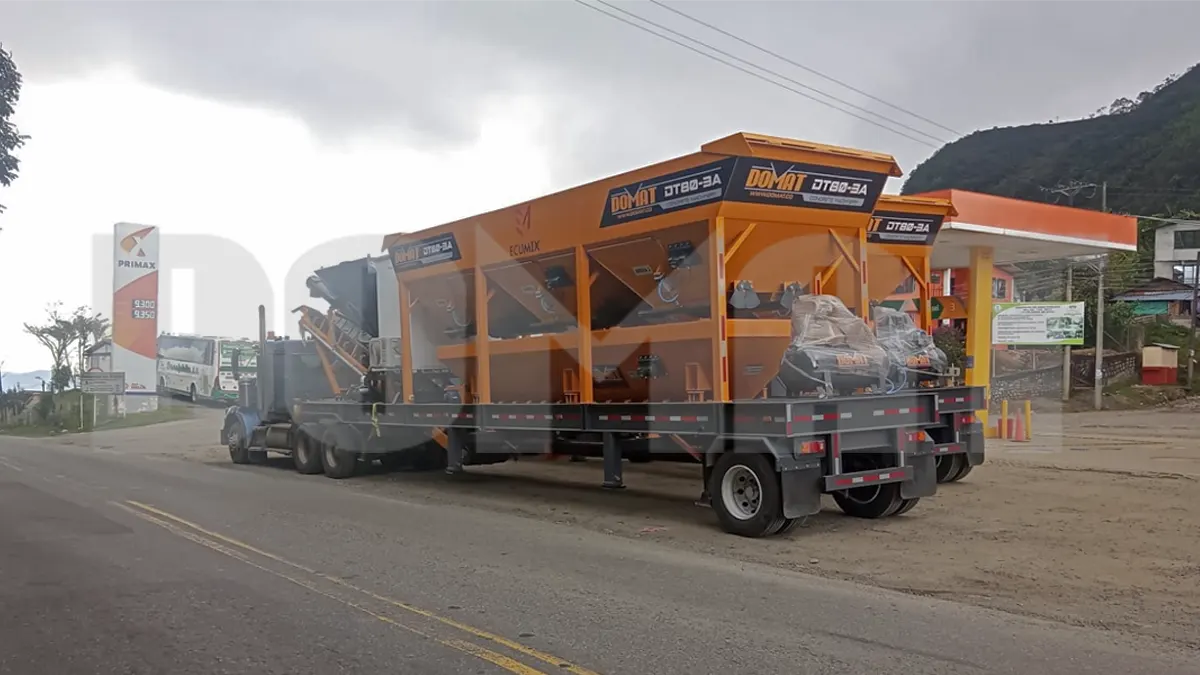
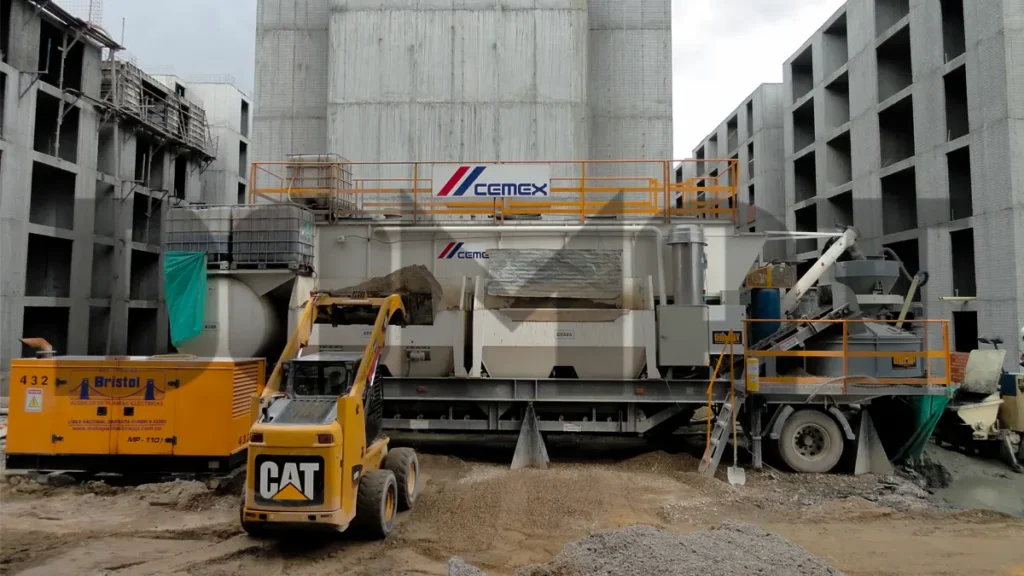
With trailer-based design and road-legal transport, contractors can:
- Deploy and start production in 24 – 48 hours
- Move between job sites without complex permitting
- Operate across multiple projects within the same quarter
Real impact:
Starting production even 5 days earlier can significantly accelerate cash flow and reduce dependency on external suppliers.
Portable vs. Mobile: A Critical Industry Misconception
In the U.S. market, many “portable” plants are marketed as mobile—but in practice, they are not.
Portable / Semi-Mobile Systems
- Require cranes or extensive assembly
- Depend on special transport permits
- Limited relocation frequency
- Designed for temporary, but fixed, use
True Mobile Systems
- Trailer-integrated structure
- No oversized permits required
- Fast relocation between projects
- Designed for continuous mobility
Key difference:
Portable plants move occasionally.
Mobile systems are designed to move constantly.
Utilization: The Metric That Defines Profitability
One of the most overlooked factors in equipment investment is utilization rate.
Traditional plants often remain idle:
- Between project phases
- During site transitions
- While waiting for new contracts
In multi-phase infrastructure projects, this idle time can represent weeks per year.
A mobile system changes that dynamic:
- Relocation in 24 – 48 hours
- Immediate redeployment to a new project
- Continuous production capability
Estimated impact:
Increasing annual utilization by even 20 – 40% significantly improves return on investment.
Real Jobsite Scenario: Fixed vs. Mobile Production
Traditional Model:
A contractor completes Phase 1 of a road project.
The plant remains idle for several days while the next phase is prepared.
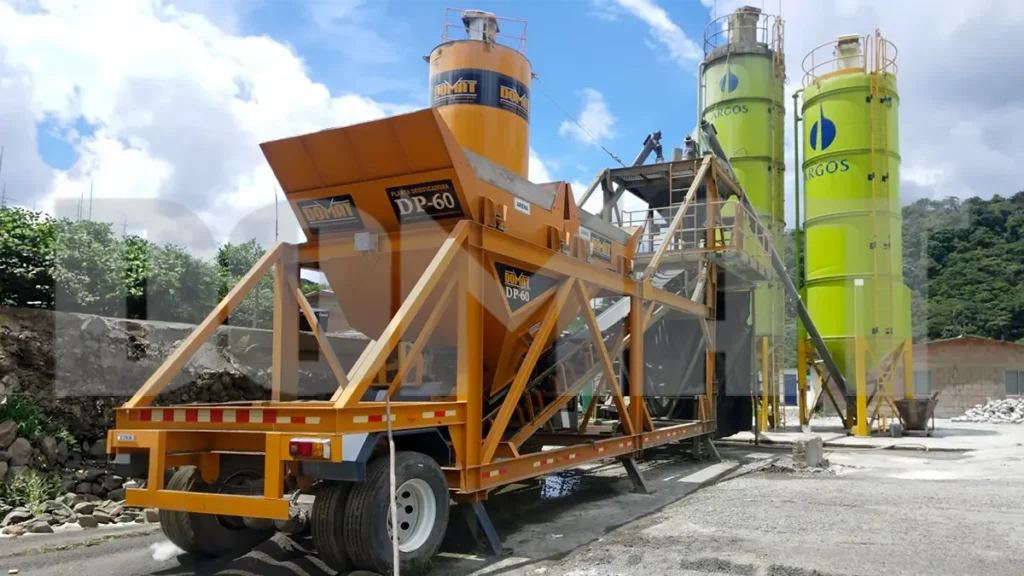
Mobile Model:
The same contractor relocates the plant within 48 hours to a new active project, maintaining production continuity.
Result:
- Reduced idle time
- Continuous revenue generation
- Better asset performance
Engineering That Enables Mobility (Not Just Transport)
True mobility is not achieved by adding wheels—it requires a complete engineering approach.
Modern mobile systems integrate:
- Trailer-based modular architecture
- DOT-compliant transport design
- Horizontal mobile silos (60–80 tons)
- Automated control systems (PLC-based)
- Precision weighing systems
Additionally, premium industrial components ensure reliability:
- Mixing technology for consistent output
- Industrial drives and motors for continuous duty
- Pneumatic systems for efficient material handling
The objective is clear:
Deliver full industrial performance with maximum mobility.
The 100% MOBILE Concept: From Feature to Competitive Advantage
In a market where mobility is often overstated, true mobility becomes a differentiator.
The concept of 100% MOBILE represents:
Credibility
Systems designed from the ground up for mobility.
Differentiation
Clear separation from hybrid or semi-mobile solutions.
Market Recognition
A strong, repeatable identity that simplifies decision-making.
This transforms a technical feature into a strategic market position.
From Equipment Cost to Revenue Strategy
Traditional purchasing decisions focus on price.
However, mobile systems shift the conversation toward revenue:
- Faster production start = faster cash flow
- Reduced idle time = higher annual output
- Multi-project capability = increased contract opportunities
This is not a cost decision.
It is a revenue strategy.
Conclusion: The Industry Is Moving—And So Should Your Production
Construction is no longer static.
Projects move. Teams move. Deadlines move.
Concrete production must follow.
Contractors who adopt mobile systems gain:
- Faster deployment
- Higher utilization
- Greater operational control
- Stronger competitive positioning
This is not an upgrade.
It is a transformation in how concrete production operates.
Need to Reduce Delays and Increase Production Efficiency?
At Domat USA, we design mobile concrete production systems built for real-world conditions in the United States.
Our solutions include:
✅ Mobile batching and mixing plants
✅ Storage silos and material handling systems
✅ Automated control and monitoring systems
✅ Custom-engineered configurations
Each system is developed to maximize:
- Speed
- Reliability
- Profitability
🔎 Explore our mobile solutions
📩 Contact our team to define your optimal configuration