

When Production Has to Move With the Project
Infrastructure projects do not always stay in one place. As work moves across a project or between project locations, concrete production may need to move with it.
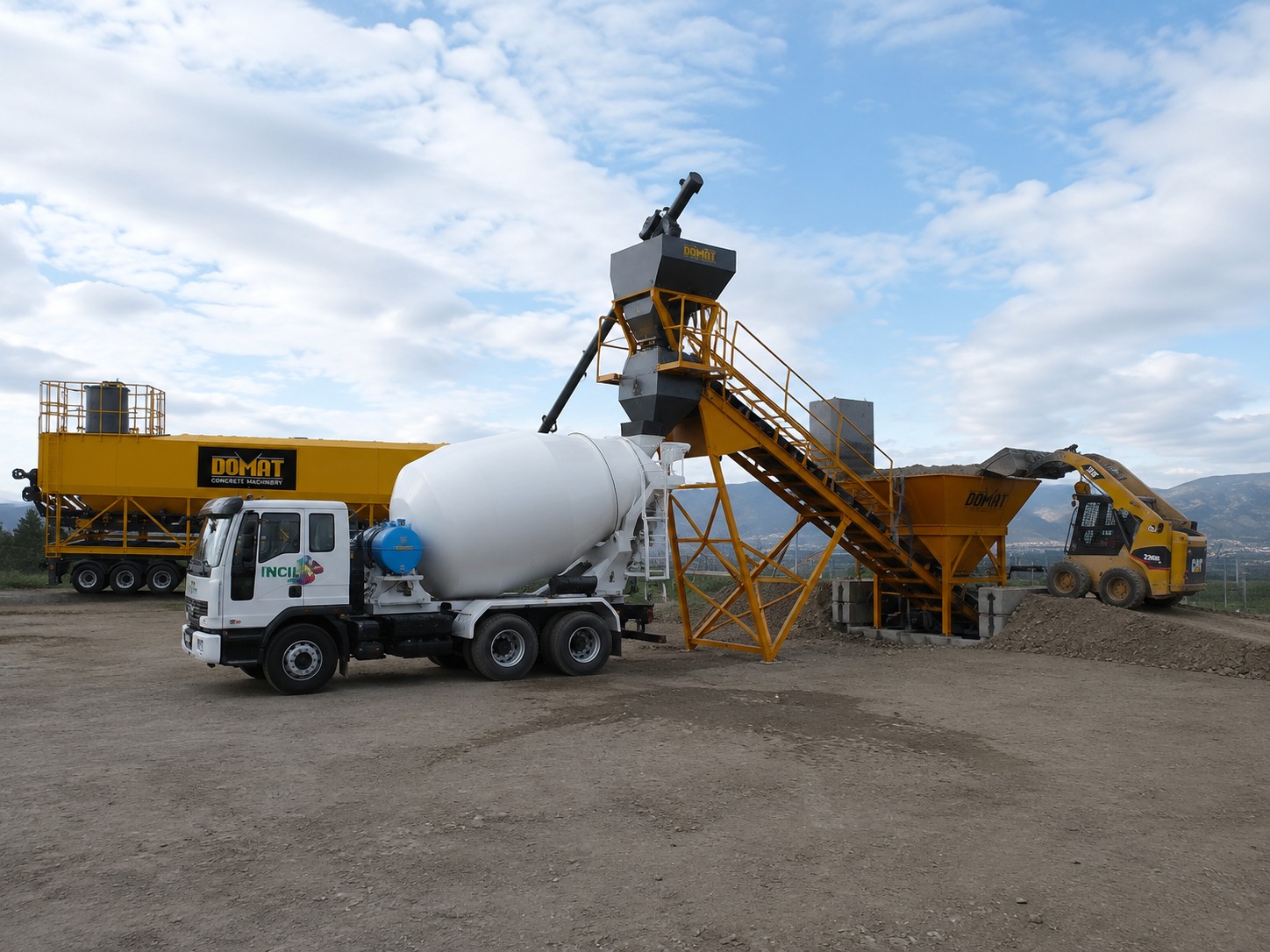
That transition involves more than transporting equipment. Site readiness, access, positioning, connections, material availability and the steps required before production can begin all become part of the deployment process.
When those activities are difficult to coordinate, moving production between project phases can create unnecessary non-productive time. When the production system is designed around repeated deployment, the move can instead become part of a planned operating workflow.
This is where true-mobile production becomes an operational consideration rather than simply a transportation feature. The goal is not just to move the plant, but to keep production aligned with where the work needs to happen.
How can setup and relocation be approached as a repeatable process rather than a one-time move?
Plan the Deployment Before the Move.
Review the project location, schedule and deployment requirements with DOMAT USA before production needs to shift.
What Makes a Mobile Concrete Plant Truly Ready for Deployment?
Being mobile does not simply mean that a concrete plant can be transported. A truly deployment-ready system also depends on what happens before the move, when the equipment reaches the site and during the transition into production.
Readiness is a combination of transport configuration, destination-site preparation, connections, controls, material availability, personnel and commissioning requirements.
Pre-Mobilization Planning
Before equipment moves, the project team should understand the destination, schedule, access requirements, site readiness and the conditions that need to be in place before deployment.
Transport & Site Arrival
Transportation is only one stage of the move. Arrival also needs to align with site access, the planned placement area and the project's operational schedule.
Positioning, Connections & Readiness Checks
Once the system is positioned, the required connections, controls, materials and site conditions need to be verified before production begins.
Commissioning & Production Start
The final transition is from setup to production. Commissioning and operational readiness connect the physical deployment with the start of concrete production.
Setup and deployment time can vary with configuration, site conditions, project requirements, material availability and operational readiness.
Plan the Setup Before the Plant Arrives.
A deployment discussion can help organize project conditions, site requirements and production objectives before equipment reaches the jobsite.
From Project Planning to Production Readiness
A successful mobile concrete plant deployment is not defined by transportation alone. The transition from one jobsite to another involves a sequence of planning, movement, setup and readiness activities that should work together.
Treating that sequence as a repeatable workflow can help project teams identify dependencies before the equipment arrives and create a clearer path from mobilization to production.
Pre-Mobilization Planning
Before the plant moves, the project team should establish the destination, schedule, site conditions and operational requirements that influence deployment.
Planning ahead can help coordinate access, placement, materials, personnel and the activities required before production begins.
Transport & Site Arrival
Once the destination is prepared, transportation becomes part of a larger site-arrival sequence. Timing should align with access conditions and the project's planned deployment window.
The objective is not simply to arrive at the jobsite, but to arrive when the destination is ready to support the next stage of deployment.
Positioning, Connections & Readiness Checks
After arrival, the production system must be positioned according to the project plan and connected to the resources required for operation.
Site conditions, connections, controls, materials and other operational requirements should be reviewed before production starts.
Commissioning & Production Start
The final stage connects physical setup with operational readiness. Commissioning provides the transition from installed equipment to an operating production system.
The result is not simply a completed setup, but a production environment prepared for the project's concrete requirements.
The earlier the destination site's requirements, access and production needs are understood, the easier it is to coordinate the transition from transportation to production readiness.
Build the Deployment Around the Project.
Share your project schedule, location and production requirements with DOMAT USA to discuss the deployment considerations for your next jobsite.
How RoadMaster Supports Faster Jobsite Deployment
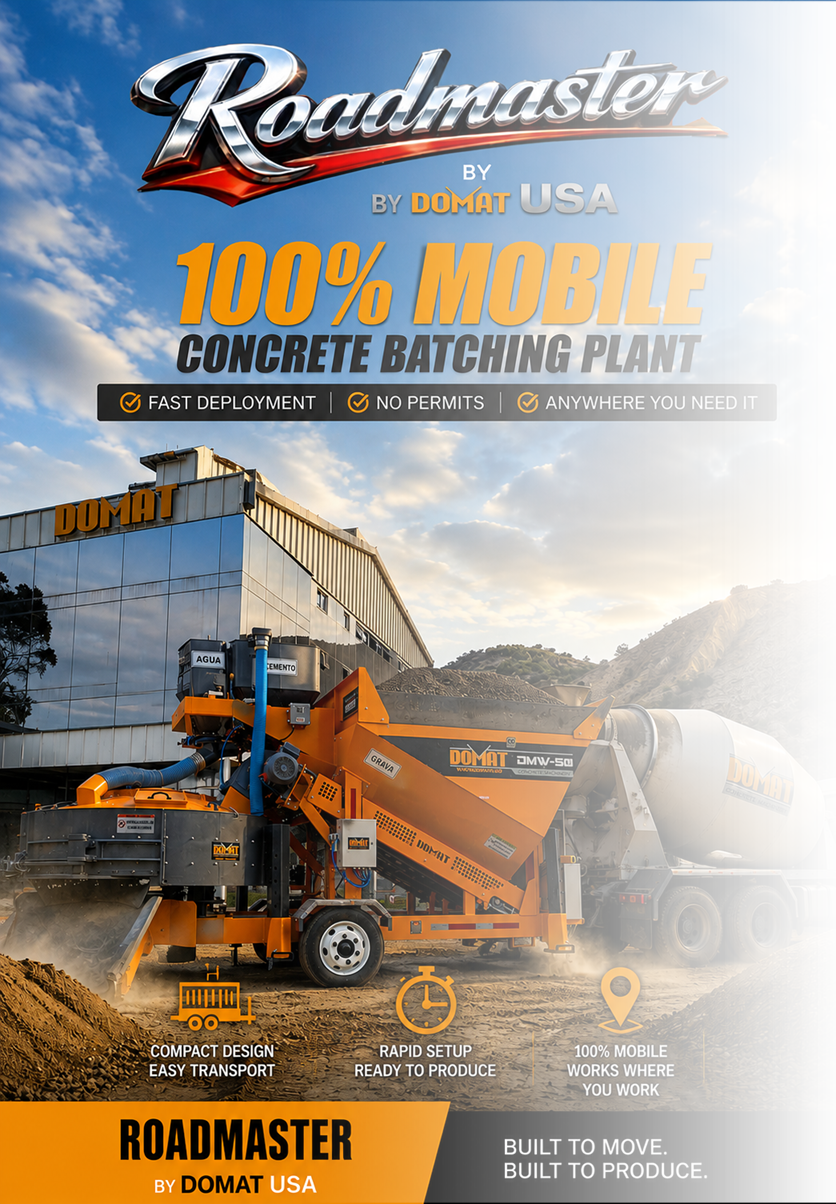
RoadMaster is designed around a true-mobile production concept, giving contractors an approach to concrete production that is built around movement, deployment flexibility and changing project locations.
Instead of viewing mobility as simply the ability to transport equipment, the RoadMaster approach treats deployment as part of the production strategy. Trailer-based and modular design principles can support a transition between locations without making the production system dependent on one permanent site.
This can be particularly relevant when project schedules, work fronts or production requirements change over time. The objective is to keep the production capability aligned with where the project needs it.
Actual deployment depends on site conditions, configuration, project requirements, material availability and operational readiness.
Match the System to the Project.
Share the location, production requirements and deployment conditions for your project with DOMAT USA.
From One Jobsite to the Next: Building a Repeatable Relocation Cycle
Relocation works best when it is treated as part of the project schedule rather than something that begins after the last day of production.
A mobile production system may support more than one project over its operating life, but the transition between sites still needs to be planned. The next destination should be considered before the current production cycle is complete.
The exact sequence and timing will vary with configuration and project conditions, but the principle remains the same: plan the relocation as an operating cycle, not an isolated transport event.
Review the Move Before the Project Moves.
Why Reducing Mobilization Friction Matters to the Operation
The business value of a mobile production strategy is ultimately connected to how effectively the equipment can support the work it is intended to serve.
Higher Productive Utilization
Less unnecessary time between project phases can support more productive use of a production asset, depending on the project schedule and operating conditions.
Greater Scheduling Flexibility
A mobile system can give project teams more flexibility when production needs change location or when work progresses through different phases.
Better Production Continuity
Coordinating relocation with the next project phase may reduce unnecessary gaps between production environments.
Discuss how mobile production can fit into your project pipeline and equipment strategy.
Where Rapidly Relocatable Production Can Make the Most Sense
Mobility becomes especially relevant when the physical location of the work changes over time, when projects are geographically distributed or when concrete production needs to be positioned closer to the active work.
Highway & Linear Construction
Long or linear projects can move through different work zones, making production location an important planning consideration.
Remote or Distributed Jobsites
When projects operate away from established production infrastructure, positioning concrete production closer to the work can become part of the logistics strategy.
Multi-Phase Construction
Projects with changing work fronts may benefit from production equipment that can adapt as different construction phases progress.
Multiple Project Locations
Producers supporting different projects can evaluate whether one mobile production asset can support changing project locations over time.
Discuss the Production Strategy for Your Next Site.
Planning Checklist: What Should Be Ready Before the Plant Moves?
A practical deployment plan starts before equipment leaves the current jobsite. The destination, production requirements and operating schedule should be considered together.
Project schedule and deployment window
Destination site readiness
Access and transportation planning
Planned equipment placement area
Material availability
Required utilities and connections
Personnel and operational readiness
Commissioning and production start target
The checklist is intentionally kept at planning level. Configuration-specific transportation, hookup, foundation or commissioning requirements should be confirmed with the appropriate DOMAT technical team.
Built to Move. Engineered for Operational Freedom.
RoadMaster's value is not limited to the physical ability to move a concrete production system. Its role is to give project teams more operational options when the location of the work changes.
By approaching deployment, production and relocation as connected parts of one operating model, contractors can evaluate concrete production as a system that moves with the work.
RoadMaster Deployment Questions
How quickly can a RoadMaster mobile concrete plant be deployed?
What needs to be prepared before a mobile concrete plant arrives?
Can RoadMaster be moved between projects?
Which projects can benefit from rapid relocation?
How can rapid setup affect equipment utilization?
Keep Production Moving With the Work.
Mobile concrete production becomes most valuable when mobility is treated as part of the operating strategy, not simply as a transportation feature. From pre-mobilization planning to site arrival, commissioning and eventual relocation, each stage can be considered as part of one connected workflow.
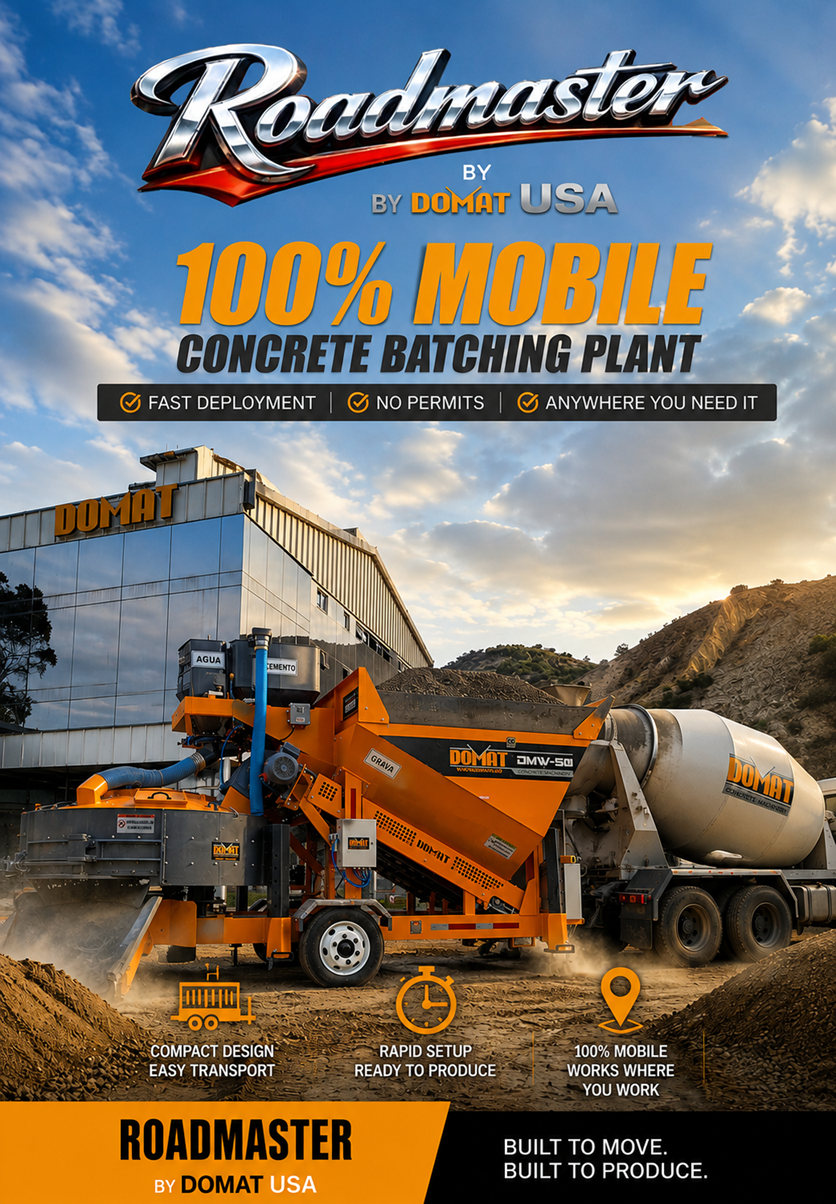
RoadMaster brings that true-mobile approach into a production system designed around operational flexibility. For contractors working across changing project locations, the question is not simply whether a plant can move, but how effectively production can move with the work.
Plan Your Next RoadMaster Deployment.
Tell DOMAT USA about your project location, production requirements and deployment needs. Let's discuss a practical path for your next jobsite.