

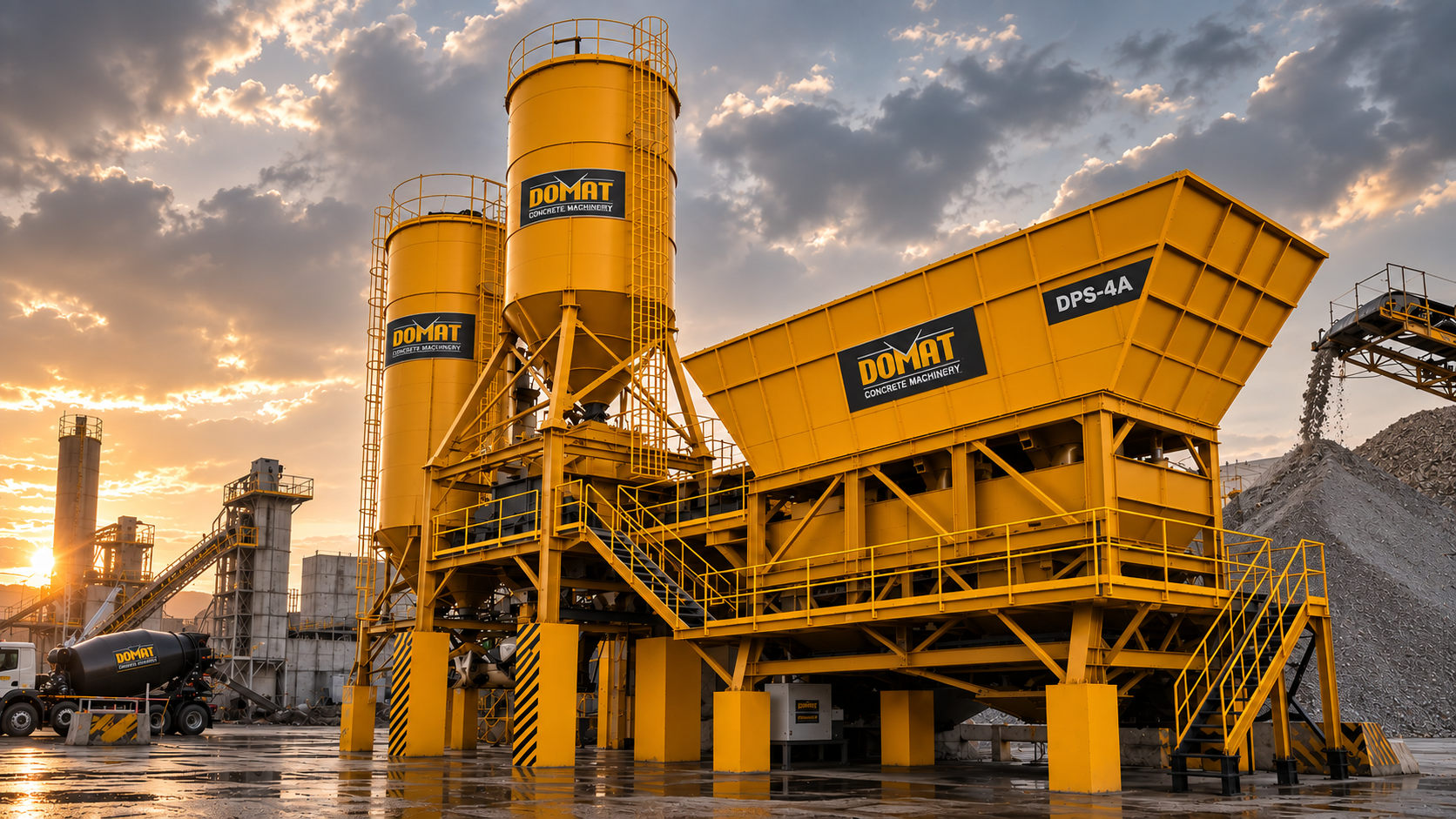
What Is a Stationary Batching Plant?
A concrete batching plant is more than a mixer surrounded by equipment. It is an integrated production architecture where multiple systems work together to transform raw materials into consistent, ready-to-use concrete.
A stationary batching plant is a concrete production system designed around a defined installation site. Its equipment and supporting infrastructure are organized to operate as a coordinated production facility rather than as a temporary jobsite arrangement.
The objective is not simply to mix concrete. Before materials reach the mixer, aggregates must be stored and fed, cement and powders must be handled, and each material must be measured according to the selected mix design. Water and admixtures must also be introduced through controlled dosing systems.
Once the individual materials have been prepared and measured, they move through the production sequence toward mixing and final discharge. The result is a connected system in which material flow, weighing, mixing, automation and discharge must remain synchronized.
This architecture is particularly relevant for operations where concrete production is expected to remain at the same location for an extended period, including infrastructure, commercial, industrial and other large-scale construction projects.
The performance of the plant depends not on one isolated component, but on how each stage connects with the next. Understanding that relationship is essential when defining a production system around real project requirements.
Start With the Right Production Architecture.
Explore DOMAT concrete solutions and begin evaluating the production approach around your project's operational requirements.
The Architecture Behind Concrete Production
A stationary batching plant works as a sequence of connected systems. Each stage prepares, measures, transfers or transforms material for the next stage of production.
The architecture begins with raw materials and ends with ready-mix concrete. Between those two points, several systems must operate in the correct sequence and remain coordinated throughout the production cycle.
Raw Materials
Aggregates, cement, water and admixtures enter the production architecture.
Storage
Materials are organized and held within dedicated storage systems before production.
Dosing / Weighing
Individual materials are measured according to the selected concrete mix requirements.
Transfer
Measured materials move through the plant toward the mixing stage.
Mixing
The measured materials are brought together to produce the concrete mixture.
Discharge
The completed mixture moves to the discharge point for loading and delivery.
Ready-Mix Concrete
The completed concrete is ready to continue into the project's delivery cycle.
Control & Automation
Control and automation coordinate the production sequence, helping the individual systems operate as one connected plant rather than as isolated pieces of equipment.
If one stage is poorly coordinated, the entire process is affected.
Connected Stages
Every production stage depends on the material flow and timing established by the stages around it.
Coordinated Flow
Storage, dosing, transfer, mixing and discharge must operate within a defined production sequence.
One Production System
The value of the plant comes from how its systems work together across the complete production cycle.
Aggregate Storage & Feeding: Where Production Begins
Production starts long before the mixer. Before aggregates can be accurately dosed and combined with cement, water and admixtures, they must first be stored, separated and delivered into the production sequence in a controlled way.
In a stationary concrete batching plant, aggregate storage provides the initial material interface between incoming raw materials and the production system.
Different aggregate sizes and material types need to remain organized so that the plant can supply the appropriate material to the dosing and weighing stage. The storage arrangement therefore becomes part of the overall production architecture rather than simply a place to hold material.
Once production begins, the feeding system controls how those aggregates enter the next stage. Conveyors and related material-transfer equipment establish the physical path from storage toward dosing, helping maintain a consistent and coordinated flow.
Aggregate Bins: Organizing the Raw Material
Aggregate bins provide dedicated storage areas for the materials required by the concrete mix. Their organization supports separation by aggregate type or size before the material enters the dosing sequence.
Dedicated Material Capacity
Storage compartments organize the aggregates required for production and maintain a controlled supply ahead of the dosing stage.
Organized Aggregate Types
Separate storage positions help maintain the distinction between aggregate types or sizes required by the selected mix design.
Controlled Material Release
Material is released from storage toward the feeding and weighing sequence according to the production cycle.
From Aggregate Storage to Controlled Feeding
Storage alone does not create a production flow. The feeding and conveying system connects the aggregate storage area with the downstream dosing and weighing process.
Depending on the plant configuration, conveyors and associated transfer equipment can establish the route through which aggregates move from their storage positions toward the production sequence.
The objective is a controlled and coordinated material flow that supports the next stage without treating storage, feeding and dosing as disconnected operations.
Aggregate storage and feeding should be considered together with production demand, material variety, site layout and the dosing architecture that follows. The configuration of one stage influences the requirements of the next.
Explore the Architecture Around Your Materials.
Different material requirements can influence how a stationary batching plant is organized. Explore DOMAT stationary plant configurations designed around real production needs.
The System Behind The Functionality
A modern batching plant depends on more than mechanical components. Control and automation coordinate the sequence that turns individual operations into a cohesive production cycle.
Digital coordination allows the system to manage production sequences, operator interaction and batch accuracy while connecting the different stages of the plant. In this architecture, automation acts as the layer that keeps storage, weighing, dosing, mixing and discharge working together.
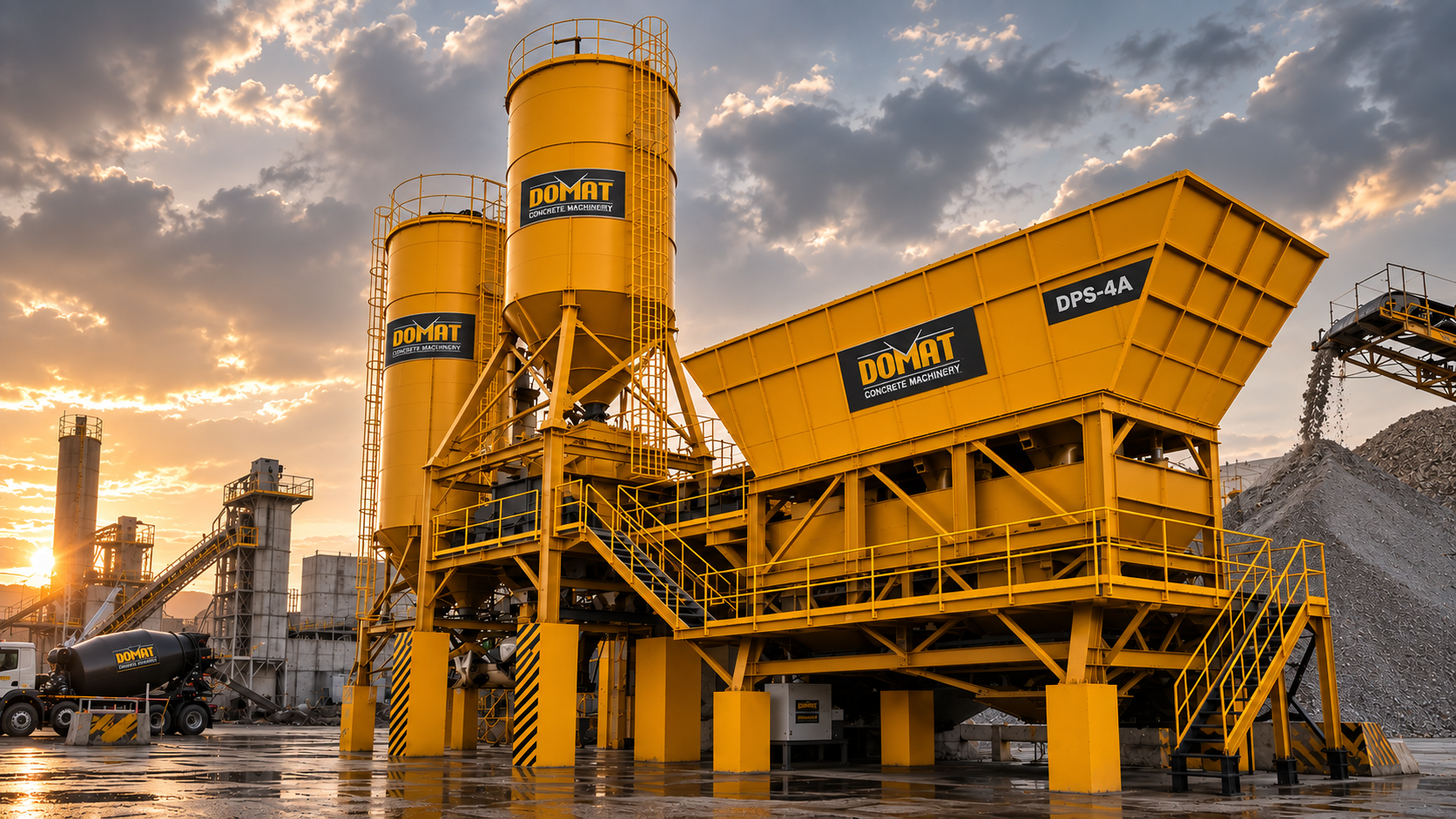
Plan Your Next Concrete Stationary Production Deployment.
Tell DOMAT USA about your project location, production requirements and deployment needs. Let's discuss a practical path for your next jobsite.